This is default featured slide 1 title

Go to Blogger edit html and find these sentences.Now replace these sentences with your own descriptions.This theme is Bloggerized by Lasantha Bandara - Premiumbloggertemplates.com.

This is default featured slide 2 title

Go to Blogger edit html and find these sentences.Now replace these sentences with your own descriptions.This theme is Bloggerized by Lasantha Bandara - Premiumbloggertemplates.com.

This is default featured slide 3 title

Go to Blogger edit html and find these sentences.Now replace these sentences with your own descriptions.This theme is Bloggerized by Lasantha Bandara - Premiumbloggertemplates.com.

This is default featured slide 4 title

Go to Blogger edit html and find these sentences.Now replace these sentences with your own descriptions.This theme is Bloggerized by Lasantha Bandara - Premiumbloggertemplates.com.

This is default featured slide 5 title

Go to Blogger edit html and find these sentences.Now replace these sentences with your own descriptions.This theme is Bloggerized by Lasantha Bandara - Premiumbloggertemplates.com.

Showing posts with label kids. Show all posts

Tuesday, 14 December 2021

What are Olympic sports?

 The best part about any Summer Olympics is that the events occur at the perfect time of the calendar year.

...
That is just one reason we tune in to watch the Olympics every four years, even for events that are tape-delayed.
  1. Gymnastics.
  2. Track. ...
  3. Swimming. ...
  4. Women's Soccer. ...
  5. Water Polo. ...
  6. Men's Basketball. ...
  7. Team Volleyball. ...
  8. Table Tennis. ...

What are the 5 Olympic Games?
Sports of the Olympic Games

Only five sports have been contested at every summer Olympic Games since 1896: Athletics, Cycling, Fencing, Gymnastics and Swimming.

How many games are there in Olympic 2021?
33 sports
More than 11,000 athletes from 206 nations will compete in Japan this summer across a total 33 sports, five of which will feature at the Olympics for the first time
What is the most popular Olympic game?
The most popular world sport as measured by other methods is soccer, which is also one of the most popular Olympic sports, though swimming and athletics reach their peak in popularity during the Olympics and give soccer some competition.
What are the 4 different types of Olympics?
Athletes from hundreds of countries meet to compete for gold, silver, and bronze medals in individual and team sports. The Olympics include the summer games, winter games, and Paralympic Games. Each type of games is held every four years, with the winter and summer games held two years apart from each other.

What are the rules of javelin?

 Javelin Throw – Rules

  • Holding the javelin must be done at the grip part and should always be maintained above the shoulder level.
  • For a valid throw, the javelin must lie before the specified zone and its tip should hit the ground.
  • There is a special marking line on the runway within which the athlete needs to throw.

What is the history of javelin?
History. Throwing the javelin as sport evolved from the everyday use of the spear in hunting and warfare. It was widely practiced in Ancient Greece and incorporated into the Olympic Games in 708BC as part of the pentathlon. It has been part of the modern Olympic Games program since 1908 for men and 1932 for women.

How is winner decided in javelin?
Javelin Basics

The most simple rule is that competitors take turns throwing a spear as far as they possibly can. The person who throws the spear, which is called a javelin, the farthest is the winner. Javelin has been a part of the modern Olympics since 1908 for men and 1932 for women.
What are the 5 common errors in javelin throw?
Look Out for These Common Javelin Throwing Errors When Coaching Young Athletes
  • Javelin held across palm.
  • Javelin held in finger tips.
  • No finger behind the binding.
  • The “One Finger” Javelin Grip.
  • Javelin tip too high.
  • Javelin tip out to the side.
  • Keep the tip of the javelin close to your eye.

What are javelins used for?
A javelin is a light spear designed primarily to be thrown, historically as a ranged weapon, but today predominantly for sport. The javelin is almost always thrown by hand, unlike the bow and arrow and slingshot, which shoot projectiles from a mechanism
Is javelin an Olympic sport?
Yes

How many attempts are allowed in javelin?
The final rankings will result from the best throw from all 6 attempts of each athlete. he final rankings will result from the best throw from all 6 attempts of each athlete. he final rankings will result from the best throw from all 6 attempts of each athlete.

Wednesday, 8 December 2021

Outdoor Games to Teach Your Kids This Fall and Winter

 
1. HORSE

How to Play It: The first person does anything they want, from spinning around to closing their eyes, before shooting a basketball into the hoop. If they miss, it’s the next person’s turn to make up a crazy shot. If he or she is successful, everyone else has to replicate the shot. Fail and you earn a letter, beginning with H and progressing to HORSE. 
The last person standing without making it to horse wins.
What Makes it Great: It’s horse! It takes a classic activity like shooting hoops or playing catch and leaves tons of room for creativity, which might be why you’ll see pros playing it whenever human-interest stories are produced. It can be played with virtually any number of players and can be adjusted for myriad age groups based on the height of the hoop.

2. Marco Polo

How to Play It: Everyone in the pool! One person closes his or her eyes and counts to 10. That person then says, “Marco.” Everyone then yells “Polo!” The Marco child pursues the fleeing Polos with his or her eyes closed periodically calling out, with the other participants responding. Whomever he or she catches becomes the next Marco, and the game starts anew. No getting out of the pool, you dirty cheaters.
What Makes It Great: Exceedingly simple to organize — and, as it’s all about stealth, kids tend to stay pretty quiet.

3. Johnny on the Pony

How to Play It: One team crouches in a line, with their arms locked around each other’s waists. Essentially forming a wall. The other team jumps on top of the line with the intent of staying on. If everyone makes it to the top, they win if they can shout “Johnny on a pony!” three times before the bottom team can shake them off.
What Makes It Great: This game is pure madness in the best way possible. Also, good practice for future rugby players.

4. Freeze Tag

How to Play It: For children already familiar with tag, this variant involves freezing if the “it” person tags you. The only way to thaw? A non-“it” player must tag you, to his or her peril. If everyone becomes frozen, the “it” person wins.
What Makes It Great: It’s tag, but with teamwork and social skills baked in.

5. Steal the Bacon

How to Play It: Teams are divided evenly and each person is designated a number. Each team stands on opposite sides with a shoe sitting in the middle (doesn’t have to be a shoe, just something easy to hold). When a number is called, the designated players from each team run for the coveted item and try to get it back to their side. If you succeed, you get a point.
What Makes It Great: Direct competition; plus, the designated caller can set up quality
 rivalries.
6. Arm Wrestling

How to Play It: Two participants put their elbows on a steady surface and grip each other’s hands. Whoever can get the other person’s hand to touch the surface wins. No use of second hand and no lifting elbow off the surface.
What Makes It Great: The ultimate one-on-one battle of strength and endurance. There’s no way to gracefully lose an arm wrestling match. You can also tie in that Sylvester Stallone movie.

7. Kick the Can

How to Play It: One person is charged with protecting a can (or whatever) while other participants attempt to run up and knock it over. The catch? The kickers hide and join the protectors’ team if tagged. The rules can lead to an impasse, but when they don’t it’s a blast.
What Makes It Great: You get to briefly live the life of a hobo during the great depression.

Monday, 6 December 2021

8 Health Benefits of Playing Video Games


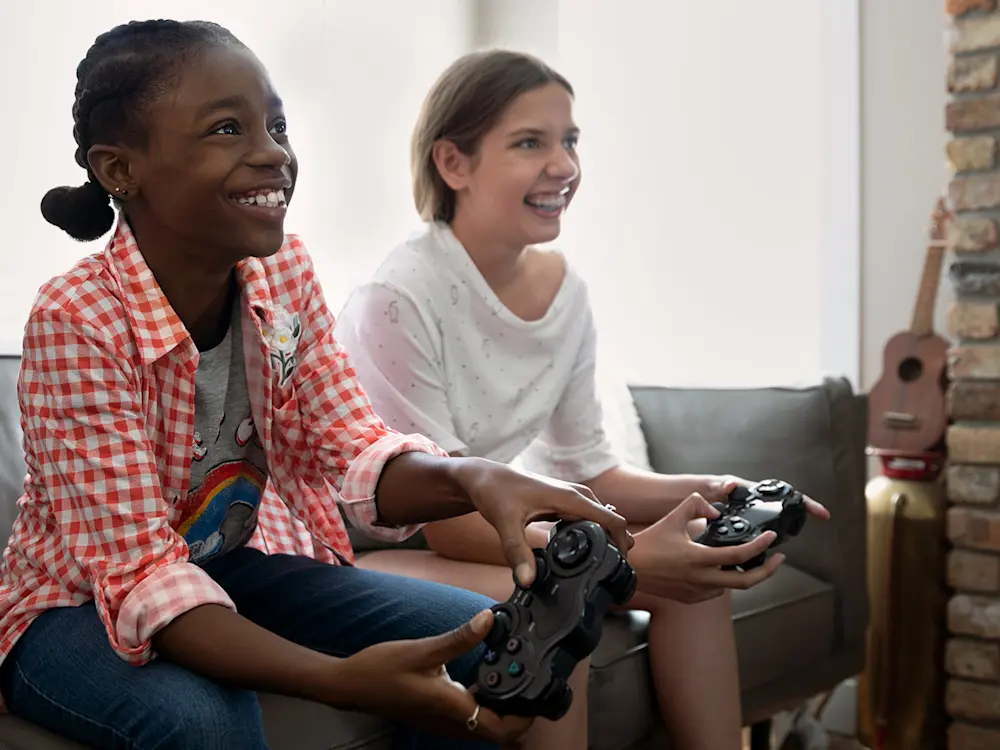
The debate has been going on for a long time whether video games are good or bad for us and most people assume that they are bad for both your mental and physical health. Most people deem video games as unsophisticated and time-wasting, you just sit on your couch and stare at the screen. That's what most people think about video games but in reality, video games are known to be very beneficial. Believe it or not, scientific research shows that video games are actually good for you.

Video games have various positive effects on both your mental and physical health. Gaming can help those suffering from various addictions or cravings to decrease their intensity of desires. A person learns various things by playing video games and applying those things in real life. Contrary to popular belief, video games can actually promote and improve health & social activity through various avenues.

Here are some of the Health Benefits of Playing Video Games:

Better Problem-Solving Skills: Playing games can teach you to solve different kinds of problems. When a person starts playing video games, then he encounters different types of problems during the game and to progress further in the game, he has to get a way around those problems and solve them. This can help develop the problem-solving skills of a particular individual, and those people who play strategy-based games show an improvement in their problem-solving skills.

Improves Brain Function: Various recent studies have suggested that playing video games can help improve the function of your brain. Playing video games is known to increase the gray matter of your brain or in simple terms, the size of your brain. This can have profound effects on a person's brain function as playing video games can have impacts on different regions of the brain that are responsible for memory, spatial orientation, information organizations, and fine motor skills. Playing games can exercise your brain and improve your brain function.

Improves Eyesight: Video games are also known to improve your vision as long as you are not sitting in front of the screen for 5-10 hours and sitting two feet away. A study has shown that playing video games can make a person more responsive to different shades of colors.

Good for Mind: Video Games also have a benefit on your mental health and they can boost your mood and help relieve anxiety & stress. According to various studies, the relation between video games & stress has been found and that's why video games have been used for various therapies for over a decade.

Helps you to be Persistent: Video games can also help you to be more persistent. You either win or you keep on trying, games help you to be persistent and it can also help you to be more confident, persistent towards your goals, and learning from your mistakes.

Involve Physical Activity: Nowadays, most video gaming consoles come with technology to get gamers off of their chairs and couch & onto their feet. An example is VR gaming that not only takes gaming to the next level but also involves physical activity to keep the gamers fit. Game developers are now starting to develop such games that are played across physical space, building the game around real-world location and events, to make sure that the gamers are also physically active.

Better Social Skills: Most people think of a video gamer as a stereotypical shy person who is introvert and afraid to develop social relationships, but that is only shown in movies, in reality that is not the case. People who play video games are likely to have good social skills and build better relationships with people around them due to the teamwork, social, and collaborative components of certain video games.

Better Decision-Making: People who play video games are also known to be better at decision-making. This come from the fact that most video games involve the buildup of certain reflexes and making quick & best decision in various situation to get out of them and a person playing such video games will also develop better decision-making skills in real life because the video games are teaching who to take the sensory data in and translate into correct decisions for the given situation.

These are some of many benefits of playing video games and how video games can have beneficial effects on your health. It is a common myth that video games are bad for your health. If you don't exceed the limits and don't overplay the video games than they are definitely good for your health, however, if you keep on playing video games for long hours then they will definitely have a negative impact on your mind and health because excess of anything, be it video games or anything else is not good.

6 surprising benefits of video games for kids


Here are six surprising benefits of playing video games.


1. Reading


Studies show that kids who play video games may get a small boost to their reading skills. This is true even for kids who struggle with reading, and even when playing action games.


Researchers think that this may happen because kids need to figure out text instructions to play. There’s also a fun factor. Kids who are reluctant to open a traditional book may rush to read a website or internet forum to get the latest on their favorite game.


That doesn’t mean video games should replace books, though.


2. Visual-spatial skills


Many games — like Minecraft — are set in 3D virtual worlds that kids have to navigate. And there’s no GPS or smartphone map app to lead the way.


The result is that kids who play these games have the chance to practice their visual-spatial skills . This can lead to a better understanding of distance and space.


3. Problem-solving


At the heart of every video game is a challenge. Some games can be mindless, like Space Invaders. But many others — from puzzles and mysteries, to managing virtual cities or empires — offer kids the chance to take on a problem and work to find a solution.


Some researchers say kids who play these video games improve in three areas: planning, organization, and flexible thinking. But don’t get too excited about this. It’s not clear that these gaming problem-solving skills carry over into daily life. And there’s no evidence that so-called “train the brain” games can improve real-world skills.


4. Social connections


Some kids have trouble fitting in and making friends in real life. Video games can be a refuge for them to find people to connect with positively. In our busy lives, games offer virtual playdates with real-life friends.


Video games also give kids something to talk about at school. These days, games are a mainstream topic of conversation for kids, just like sports and music. An interest in gaming can help kids who have trouble coming up with topics to discuss.


On the flip side, kids who struggle socially in real life may also have trouble online. Learn how this can play out in multiplayer online video games .


5. Imaginative play and creativity


When kids are young, there’s a lot of space for imaginative play, from LEGOs to dolls to make-believe. But for tweens and teens, society sometimes frowns on that play. Video games give kids a chance to continue imaginative play.


There’s also some evidence that games encourage creative thinking. In one study, 12-year-old gamers were asked to draw, tell stories, ask questions, and make predictions. All the kids showed high levels of creativity and curiosity.


6. Video gaming careers


The 16-year-old winner of the first Fortnite World Cup won $3 million. The other 99 solo finalists won anywhere from $50,000 to $1.8 million each.


Just as with professional sports, the chances of becoming a professional video gamer are very small. However, the video gaming industry is growing by leaps and bounds, much faster than traditional sports and entertainment.


There are lots of careers in this growing industry — careers like coding, marketing, or running events.


Sunday, 5 December 2021

10 Indoor games to play with your kids

 Kids are notorious for doing all they can to avoid staying indoors. But going out to play is not always possible, especially when it’s raining, or dark outside. In situations like these, it’s time to bring out those indoor games.

Forget Ludo or Snakes and Ladders; here are ten exciting indoor games that will keep your (and your neighbors’) kids occupied:


 1. I spy:

This is an excellent game for younger kids as it helps them learn letters of the alphabet, form words, and understand things around them. Pick objects that are in clear view of the kid. This game is both fun and educational.


 2. Hide-and-seek:

For those with large homes, hide-and-seek can be plenty of fun. Kids love ‘peek-a-boo’ and the game can prove quite exciting for them. And the next time you want to feed your kid vegetables, you’ll know exactly where they’re hiding.


 3. Simon says: 

Simon Says is a great game that tests alertness and quick responses. Whoever decides to be Simon must give the others commands starting with ‘Simon says…’. Anybody who fails to follow instructions or gets misled into following commands that don’t start with ‘Simon says’ is out.


 4. Musical chairs:

The quintessential party game also doubles as a lively indoor game and is best enjoyed when in the company of other people.


 5. Scavenger hunt:

While scavenger hunts are typically conducted with hidden clues scattered over a large area that’s also replete with good hiding places, they are equally delightful indoors. Devise simple and fun clues with a creative ‘treasure’ at the end.


 6. Charades:

Charades is a long-standing indoor game that’s enjoyed by children and adults alike. Use only actions to convey the name of a book or a movie to your team within a time limit while the other teams struggle to control their laughter.


 7. Scrabble/Boggle:

 Scrabble and Boggle are fun word-building games, where you score points based on your word or number of words you can find. They help improve your child’s vocabulary, and the competition is enough to keep them interested while learning new words alongside.


8. Pictionary:

Try and get your teammates to guess a word by drawing it on the board. The faster they get it, the more points you score. The team with the most points at the end wins. More often than not, it’s terrible drawing skills that make the game more enjoyable.


 9. 20 questions: 

Think of a famous person/book/movie (as decided); your opponent has to guess the name by asking you 20 questions. The questions have to be answered with either a yes or a no; you cannot ask for direct information about the answer.


 10. Uno:

A family favorite, Uno is fun and requires you to be alert. It’s great for those rainy evenings.


Saturday, 4 December 2021

Why Should My Child Play Outside? Benefits of Outdoor Play for Kids


Today’s kids average seven hours daily in front of electronics, such as television, tablets, laptops and phones. There’s no denying what the statistics show — today’s kids are swapping active, outdoor play for a more sedentary lifestyle, causing severe consequences for their health and overall well-being.

If you’re like most parents, you probably already knew your kids tend to devote more waking hours to “screen time” than they do to outdoor play. The decline in active kids is an increased focus of influential people and media outlets, most recently by former First Lady Michelle Obama in her “Let’s Move!” campaign. But, while most parents recognize their kids aren’t moving enough during the day, some aren’t sure why it’s so crucial.

Most parents would agree they want their kids to be physically healthy, well-rounded, independent and compassionate individuals. What if we told you the best way to instill these qualities in your kids was to inspire them to spend more time outside?

Encouraging children to spend more time in the outdoors and away from technology aids their physical well-being, and helps them improve their emotional and intellectual health, too. Whether it’s a trip to a nature-inspired park or taking a hike through the woods with their family, there’s no denying the benefits of stepping away from the screen and into the sunshine.

Read the full article or jump to a specific section:

Physical Development Benefits of Outdoor Play

The benefits of outdoor play for children’s development are extensive, both in early childhood and the school-age years. Outdoor play directly impacts a child’s weight, physical strength and ability to fight off illness. Kids who spend a lot of active time outdoors in their early years generally continue to exercise more regularly as they age.

Encouraging outdoor play in young children helps develop a healthy attitude about maintaining an energetic adult lifestyle.

When compared with their peers, kids who spend more time outdoors typically exhibit the following attributes.

1. Improved Motor Skills

Outdoor play leaves kids with more advanced motor skills than their “indoor” peers, including coordination, balance and agility. Kids who play outside are more likely to move in ways that challenge their muscles, bones and physical endurance. When children are outside, they have the space to run, walk, jump, swing and throw. They can play catch. They can crawl under bushes, climb trees and ride bikes.

When you allow kids to practice their physical abilities, they strengthen their bodies and become more confident in their capabilities. For kids who are athletes, extended time outdoors can also offer the opportunity and space to practice skills like batting, kicking and catching — whichever they need for the sports they’re learning.

2. Lower Body Mass Index

In 1980, just 7% of kids met the criteria for obesity. Three decades later, studies found upwards of one in three kids could fall under the obesity classification. The culprit of this dramatic rise in childhood obesity is twofold — Americans are eating more and spending less time being active.

Kids who spend more time playing outside are less likely to be obese because they are so energetic. They’re away from the television or computer screen. They’re running, jumping, climbing and generally burning more calories than their sedentary counterparts.

One study of preschool-aged children showed a direct correlation between a child’s body mass index and the amount of time they are active outside. The longer the child’s parents or guardians allowed them to play outdoors, the lower their BMI. Other studies show kids with close friends who also enjoy playing outdoors are more likely to spend time outside. Therefore, encouraging kids to choose active friends can also benefit them.

3. Improved Overall Health

Limiting a child’s risk of becoming obese has many long-term health implications. Obese kids are at higher risk for problems like cardiovascular disease, asthma, diabetes and sleep apnea. And, exposure to sunlight improves moods and strengthens immune systems. Outdoor play also helps children with ADHD by giving them an outlet for the activity and energy that often create issues indoors.

4. Improved Muscle Strength

When you’re pushing your child in a swing, all their muscles become engaged as they figure out how to hold on, sit up and follow the swing’s movement. Though most parents think of swinging as a repetitive, monotonous playground activity, it helps young children develop muscle strength. Outdoor toys like scooters, bikes and even skateboards require your child to engage and strengthen various muscle systems, as well.

Social Development Benefits

While there are many physical benefits to outdoor play, it also provides a remarkable opportunity for social development in children. Consider these notable advantages.

1. Increased Openness With Parents and Caregivers

When kids are indoors, they are often in smaller spaces and competing with other children, such as schoolmates or siblings, for attention. It can get loud and overwhelming, which often causes kids — especially younger ones — to get intimidated and increasingly quiet. That can prevent them from opening up and sharing with their caregivers.

When kids spend time outside, they generally feel less overwhelmed because they are not cooped up and vying with others. This feeling of having the physical space to move and breathe often results in a child being more willing to open up and talk about things with their parent or caregiver.

2. Greater Self-Awareness

Children who play outside are more likely to develop observational and reasoning skills. Playground activities, like swinging, have many physical benefits for kids. Being outdoors also lets them explore the world from a different perspective. It shows them how to be aware of the space they’re in and understand the concept of “cause and effect” as they see what happens when a grownup pushes them on a swing.

3. Appreciation for the Environment

In one study, 87% of individuals who spent time outside as children carried a love of nature into their adult years. Of those same people, 84% said they still considered the environment a priority.

The reason for this is simple — by spending a lot of time outside, children learn to appreciate the environment because they have firsthand knowledge of plants and animals.

They’ve watched squirrels chasing each other up a tree. They’ve witnessed a sunset. They’ve caught ladybugs. They’ve planted flowers, climbed trees and explored parks. As they grow, their fond memories of their childhood experiences lead them to more awareness and compassion. They feel motivated to preserve the spaces they loved as children because they’ve experienced the value.

4. Improved Peer-to-Peer Relationships

Kids who play outside are more self-aware, and their awareness of others and their feelings also increase. Studies show that kids who play outdoors are less likely to bully other children.

Outdoor play often requires imagination and teamwork, which helps children have positive interactions with each other. That doesn’t mean there won’t be arguments over whose turn it is to go down the slide or shoot a basket. But, in general, kids who consistently play outdoors are more likely to get along with their peers and find common ground.

Of course, it doesn’t hurt that soaking up all that sunshine improves their moods. It’s harder to be angry at someone when you’re in a good mood!

Emotional Development Benefits

Along with the social and physical benefits of outdoor play, children who play outside tend to be stronger emotionally and process things more easily than children who don’t get ample opportunities to play outside.

1. Use of All Five Senses

Preschoolers who watch a lot of TV are only using two of their senses — sight and hearing. That can severely limit their ability to process and respond to sensory stimuli they encounter as they grow. On the other hand, children who play outside engage more of their senses by exploring the outdoors — perhaps even taste, as they catch snowflakes or raindrops on their tongues.

For younger children, this familiarizes them with various sensory experiences, so they can process them better as they continue to grow and develop.

2. Develop a Sense of Independence

Being outside has proven to help children develop their sense of independence. Even though a parent is usually close by, children feel a sense of freedom when they’re at the park that they don’t experience elsewhere.

They get the chance to explore and take limited risks without feeling like an adult is breathing down their neck, invent games with their friends, explore their boundaries and figure out what they’re capable of doing. The confidence that results from this will help them as they continue to learn and grow.

They can try tasks and activities they wouldn’t be able to do inside and apply problem-solving strategies to questions like, “Can I climb across those monkey bars?” or, “Can I reach that net if I jump high enough?”

Intellectual Development Benefits

Many parents think the best way to develop their child’s intellectual abilities is to spend more time learning in an organized classroom environment. But, did you know encouraging your child to spend time outside is also a great way to develop their intellectual abilities? Outdoor play has the following crucial advantages.

1. Aid With Brain Development

When kids are running around outside, they are inventing games, exploring the world around them and experiencing feelings of independence. Besides developing this autonomy, they also cultivate their organizational abilities and decision-making skills as they work individually and with their peers to create games, solve problems and implement their ideas and solutions. As kids play, they also learn more about the importance of creating and following rules.

2. Improve Communication Skills

When they’re on the playground or at a park, kids have many opportunities to meet other children and cultivate friendships with them. They meet people who are different from them and develop the skills they need to play successfully with many different children.

While parents do facilitate this to a degree — especially if they arrange playdates with friends to meet up in an outdoor space — playgrounds and other common outdoor spaces allow children the space they need to practice meeting and developing friendships independently.

3. Expanded Learning Space

Putting educational toys and materials outdoors gives kids a chance to learn new information and skills by playing. It also shows kids they can learn anywhere, not just in classrooms and indoor learning spaces. For example, as they keep score during games, they strengthen their ability to count and learn about relationships between numbers as the score increases.

Importance of Outdoor Play for Younger vs. Older Children

Kids play differently at various life stages. You can’t expect a 2-year-old to play the same way as a 6- or 8-year-old. But, even though they’ll show different interests depending on their developmental stage, children of all ages can benefit from outdoor play. That’s true for children in their younger years and as they grow into adulthood.

Between the ages of birth and 2 years old, children have limits to what they can do outside, but that doesn’t mean they shouldn’t have the opportunity. At that young age, most kids will explore or play alone, developing their senses and acclimating to what’s around them. Around 2 years old, parents may see their child observing older kids at play, though they will most likely still prefer independent play. You may also notice your child progresses from observing other children to choosing to play nearby.

Once kids move into the preschool phase at 3 to 4 years old, they will begin to show signs of interacting, though it will still be minimal. You’ll notice a group of kids may all be playing on a jungle gym, but one will be on the slide, while one is climbing a ladder and another is doing something else. Then, once kids enter school, you’ll notice much more of a tendency to play games and organize activities together, such as hide-and-seek and other outdoor activities.

While outdoor play looks different as children grow and change, parents must remember all outdoor activity is beneficial to children. While a 1-year-old may not be able to swing on monkey bars or slide down a slide alone, they are learning a slide feels smooth, sunshine is bright and birds live in the trees around the park where you go to explore.


How Can You Encourage Your Child to Play Outside?

Whether your child is 2 or 12, it’s vital to encourage them to spend time away from the screen enjoying the outdoors. Exploring parks and playgrounds can be the way to help your kids enjoy being outside, whether they’re playing alone or with their friends.

Here are some ways you can encourage your child to play outside.

1. Make It Fun

Children won’t want to go outside if they think it’s boring. Spark your child’s imagination by providing them with fun things to do, like:

  • Playing basketball.
  • Playing catch.
  • Hunting for treasure.
  • Going on a scavenger hunt.
  • Visiting the local playground.

Many children find enjoyment in technology. While there are many benefits of technology use in children, there are equal — if not more — benefits in outdoor play. Making the outdoors seem entertaining encourages children to leave their technology behind and enjoy their time in nature.

2. Take Them Places

Sometimes, the confinements of your backyard or neighborhood can put physical boundaries on your child’s imagination. Make outdoor play seem like a memorable event by taking your child places, like the community playground.

Children benefit from playground adventures, as well as other community outdoor play areas, in ways like:

  • Learning how to collaborate and play with other children.
  • Gaining independence.
  • Experiencing a new range of emotions.
  • Building confidence and self-esteem.

3. Provide Options

Boredom is healthy for children’s development. It allows children to explore their environment more. When your child comes to you and complains of boredom, remind them of their options. Some things you can encourage your child to do when they say they’re bored are:

  • Bring outdoor toys.
  • Try unfamiliar playground equipment.
  • Play board games or education games outside.

Giving children options — especially outdoor play activities — empowers them to break mental boundaries and discover passions they’ve yet to discover.

4. Bring Family and Friends

Make outdoor play more exciting and beneficial by bringing family and friends into the picture. As mentioned, children benefit from playing outdoors with their peers. Engaging in outdoor play with your child hones the following skills:

  • Motor skills.
  • Emotion regulation.
  • Group leadership skills.
  • Creativity.
  • Cognitive flexibility.

Invite friends and family over to your house for some outdoor fun, like hosting an outdoor game night or a competitive relay race. Or, take the excitement elsewhere, like at your community park or playground.

5. Go Outside Regularly

It’s human nature to find comfort in familiar routines. When things are predictable, children are more confident to try new things.

Make going outside a regular activity within your family. Schedule a time for your children to go outdoors, like after school. Or, consider visiting the playground every weekend. Find what your child enjoys and stick to it.